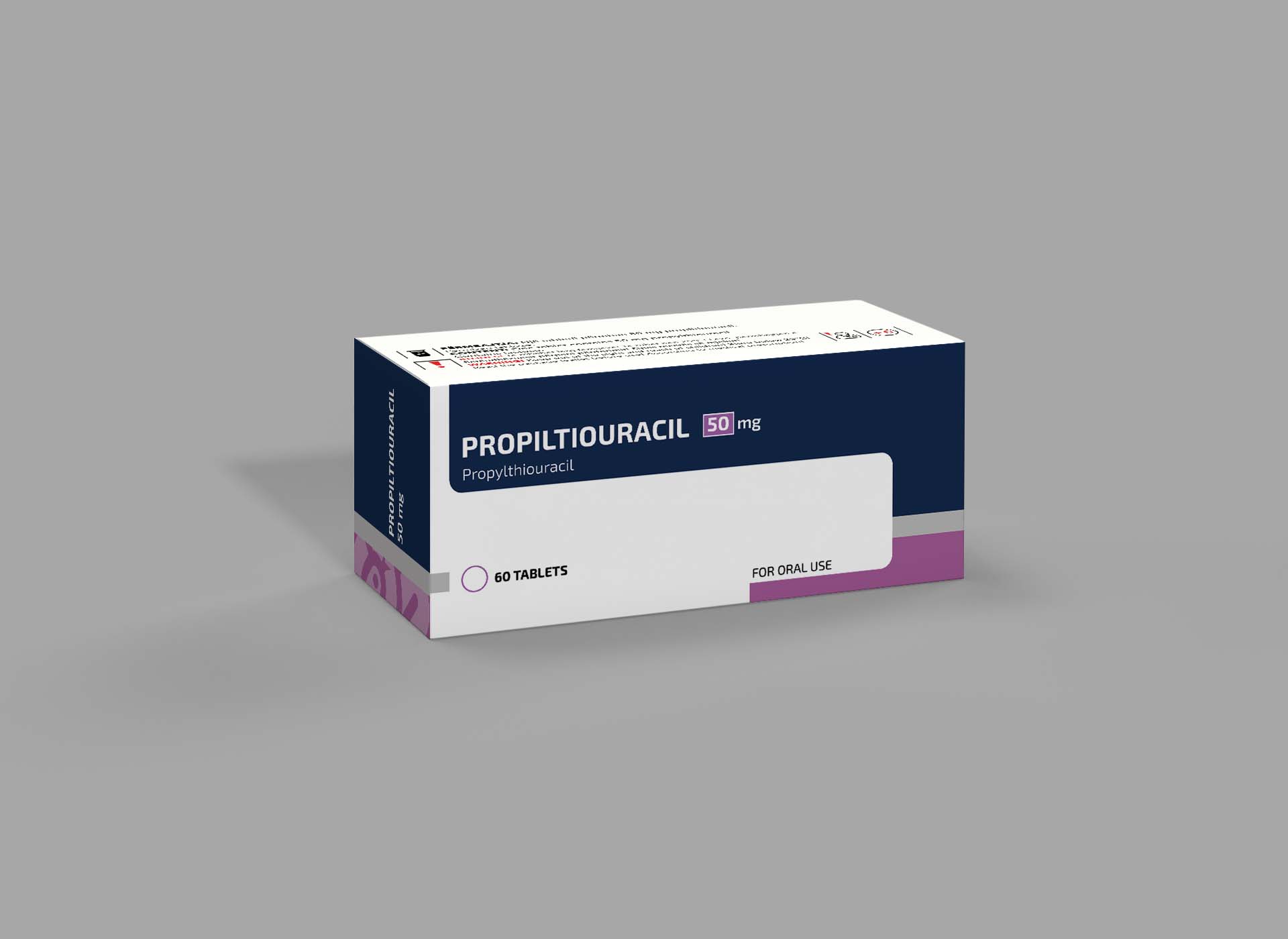
Propylthiouracil inhibits the synthesis of thyroid hormones and thus is effective in the treatment of hyperthyroidism. It does not inactivate existing thyroxine (T4) and triiodothyronine (T3), nor does it interfere with the effectiveness of exogenous thyroid hormones. Propylthiouracil partially inhibits the conversion of (T4) to (T3) in peripheral tissues.
Plasma elimination half-life of propylthiouracil is 1 to 2 hours. The duration of effect is longer than what can be predicted from the plasmatic half-life. The prolonged antithyroid effect makes possible the use of a single daily dose.