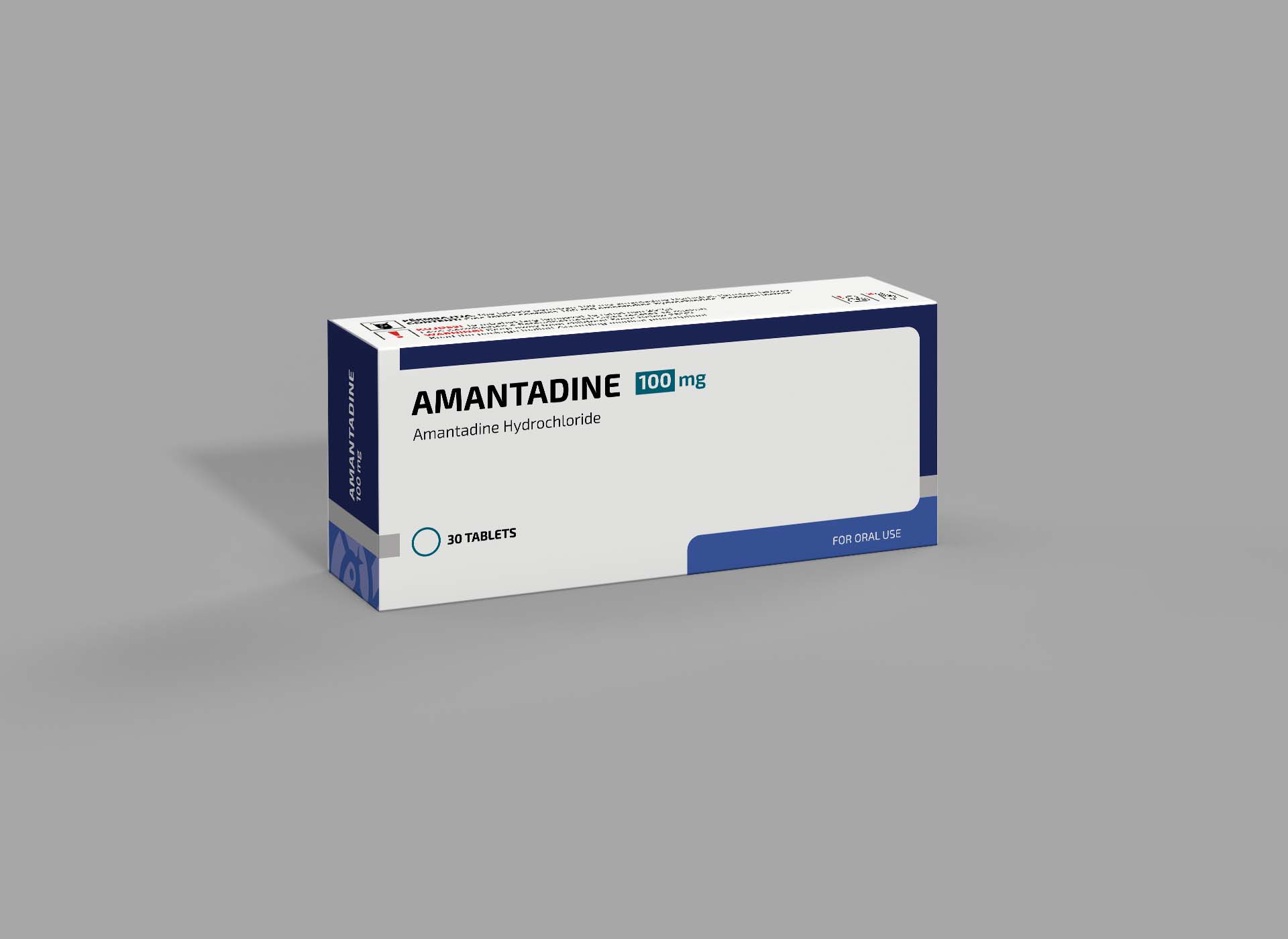
Amantadine is a weak dopamine agonist, with mild antiparkinsonian activity. Its exact mechanism of action is not fully understood but it is supposed that it helps the release of dopamine from the intact dopaminergic neuronal ends, which are located in substantia nigra in the parkinsonian patients. Amantadine is less effective than levodopa in the treatment of parkinsonism, but a little bit more effective than the other anticholinergic drugs. It may improve bradykinesia, muscle rigidity and tremor but tolerance can develop. This medicine exerts an antiviral effect against influenza type A2 virus.
Amantadine is indicated in:
• Parkinson disease;
• drug-induced extrapyramidal symptoms and syndrome;
• postencephalytic parkinsonism;
• artheriosclerotic parkinsonism;
• symptomatic parkinsonism after trauma of the nervous system from carbon monoxide poisoning.
Usually it is combined with other antiparkinsonic drugs.
Amantadine is indicated also in the prophylaxis and treatment of infections caused from influenza virus type A2, but it is ineffective in the treatment of infections caused from other types of viruses; it is used in the treatment of herpes zoster.