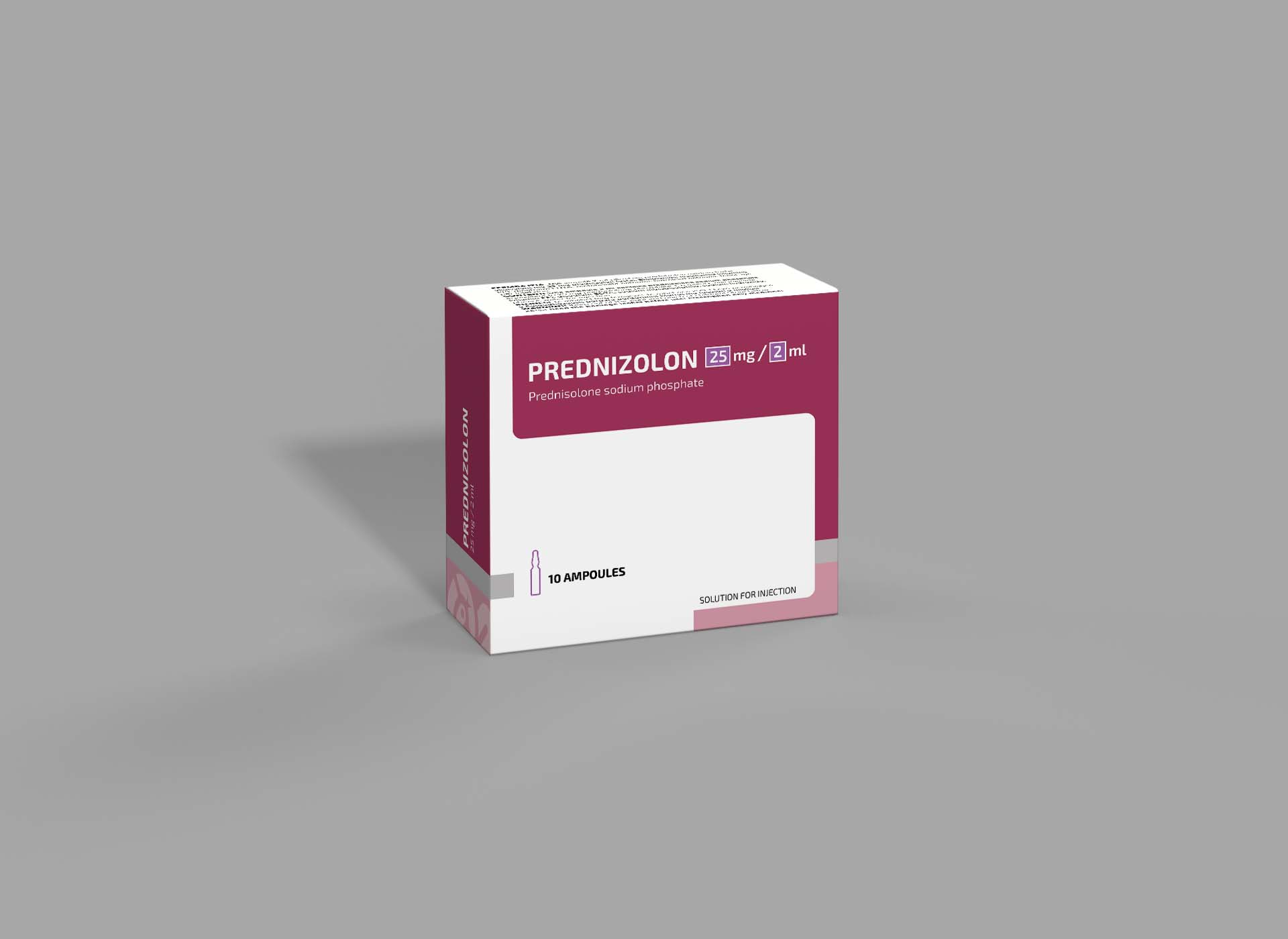
Prednisolone sodium phosphate is one of the first synthetic glucocorticoids which is used in medicine. Its pharmacologic effects are similar with those of cortisol (natural endogenous glucocorticoid). Its mineralocorticoid effects are weak, whereas its antiinflammatory and immunosuppressive effects are strong and for this reason it is used clinically.
Following intramuscular or intravenous administration, prednisolone sodium phosphate is rapidly absorbed and also peak plasma concentrations are obtained rapidly. Prednisolone sodium phosphate has a plasma half-life of 2 to 4 hours.
A. By intravenous or intramuscular injection when oral therapy is not feasible
1. Endocrine disorders
2. Rheumatic disorder
3. Collagen diseases
4. Dermatologic diseases
5. Allergic states
6. Gastrointestinal diseases
7. Respiratory diseases
8. Hematologic disorders
9. Neoplastic diseases
B. By intra-articular or soft tissue injection: as adjunctive therapy for short-term administration in: post-traumatic osteoarthritis, synovitis; rheumatoid arthritis; acute and subacute bursitis; acute nonspecific tenosynovitis;
C. By intralesional injection: localized hypertrophic, infiltrated, inflammatory lesions of: psoriatic plaques, granuloma annulare, neurodermatitis, necrobiosis lipoidica diabeticorum; in cystic tumor.